TIME AFTER TIME
A storied media brand announced their relaunch in Canada this week with a red-hot party - but WHERE were all the journalists?

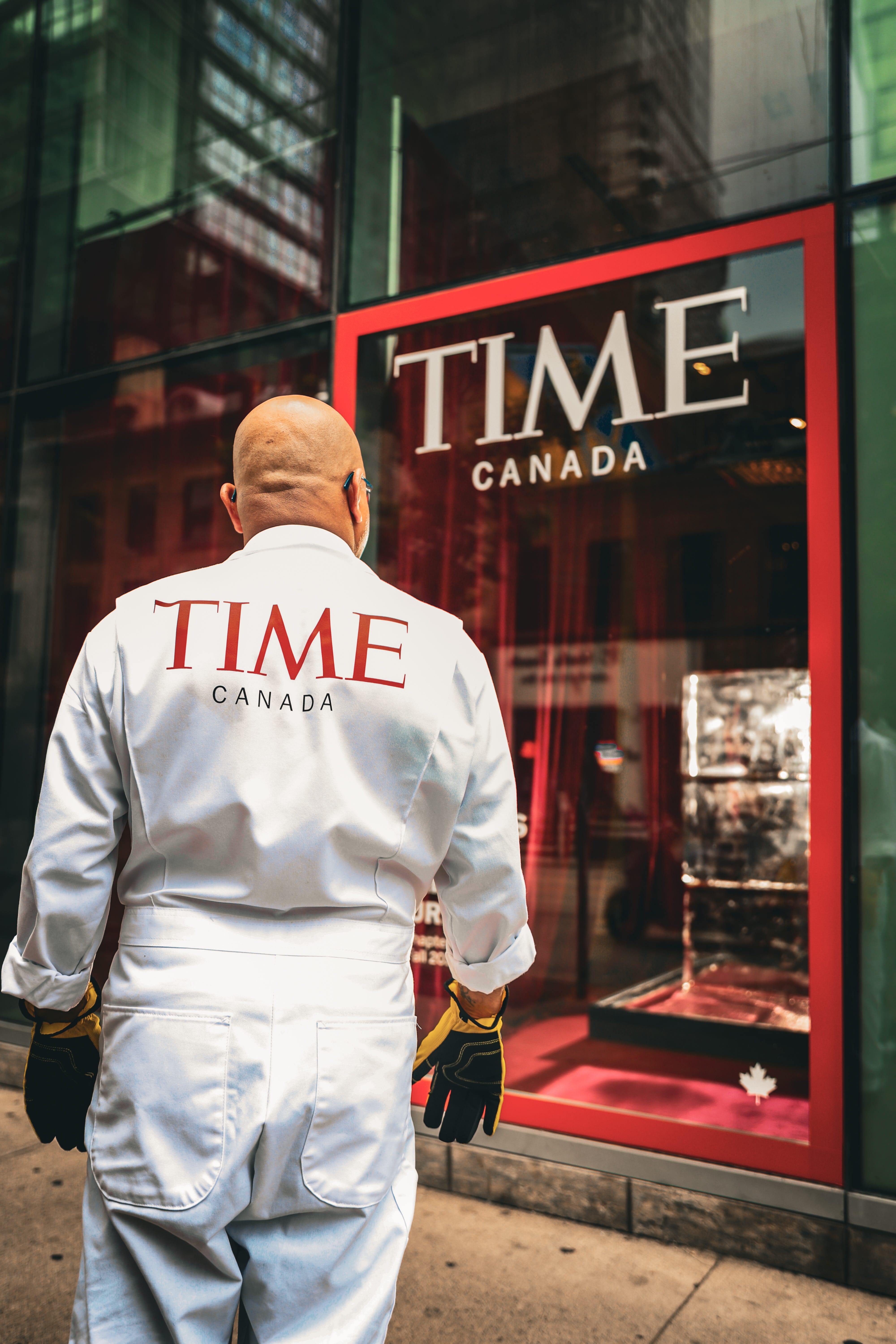
TIME, for many decades, was the Google of its time.
The ChatGPT, the TikTok, the everything.
Launched back in 1923 by Henry Luce - one of history’s most powerful media moguls - it was the first weekly news magazine out of New York City. Essentially acting as an “aggregator” before we knew that word, they whipped up politics and arts and science and lifestyle and sports, and put it on a plate.
If you were on the cover of TIME - in the time of the so-called“monoculture” - it mattered. For better, for worse, for in-between - whether it was aviator Charles Lindberg (their very first “man of the year,” in 1927) or accused killer OJ Simpson (a super famous, albeit controversial, cover, back in 1994, that blared“An American Tragedy”).
From Mahatma Gandhi to Marilyn Monroe, they all came to the print party. J.D. Salinger! Margaret Thatcher! Steve Jobs! In many cases, some of its contributors were as famous as its subjects - photographers such as Gordon Parks and Henri Cartier-Bresson. Writers like Pico Iyer. Its influence, in fact, even extends to some of the neologisms it helped invent and/or popularize - words like “socialite” and “tycoon” - and the brands its parent company, Time Inc, once spun out. Everything from People to Sports Illustrated to HBO.
So, when invites went out the other week for a very special soiree in Toronto, billed as “the announcement of TIME Canada,” I knew I had to be there. Technically a“re-launch,” as some of us know - there was a Canadian edition of the mag, indeed, until it sputtered out in 2008 - it was touted as a “new chapter of Canadian Journalism and Global Storytelling.”
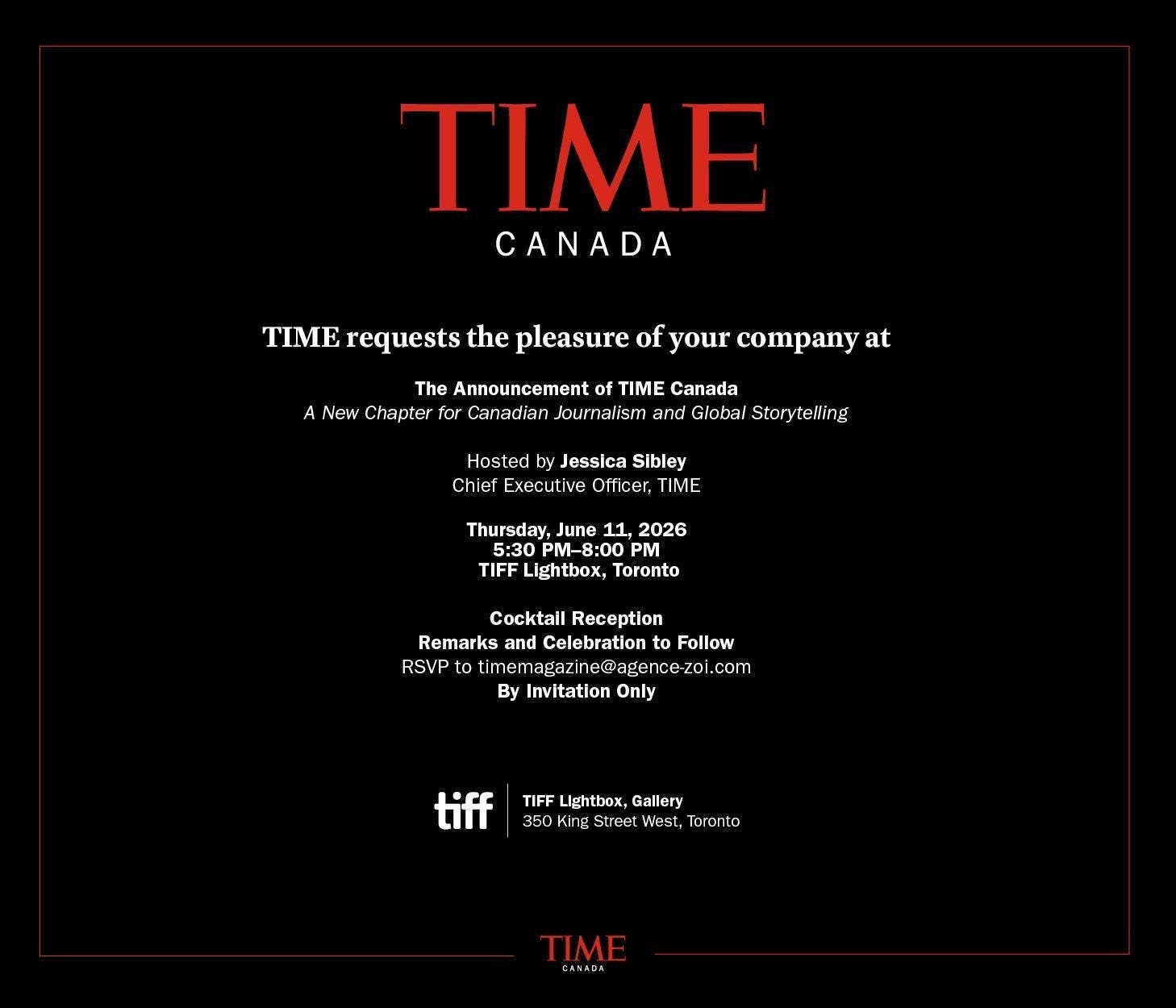
Hmmmm… But what did it all mean? And why now? Especially at a time when American-Canadian relations are in the deep freeze, for one - but also in an era when there have been more obits than christenings for media brands. Was this just another case of a legacy magazine name being dressed up in the name of “content” and sponsor-y events?
The jury: still out, if I’m being frank. Although it was certainly a nice party, held early eve on the first floor of the TIFF Lightbox, complete with “Afghan kebabs” being passed, a black-and-red palette at work lighting-wise, a definite purr in the room, and requisite “logo wall” (the kind they do at the annual Time 100 bash, which I’ve had the chance to attend several times). Wandering in, I noticed some familiar faces: actress Sarah Gadon, Dragon’s Den smarty Michele Romanow, designer George Sully, and model Nick Bateman.
Certainly, the evening’s host, Jessica Sibley - the Chief Executive Officer of TIME - said all the right things, referencing the magazine’s rich history, its place in the “global conversation,” but also calling out Canada’s rich contribution in any number of fields over the years
“We are just so excited to be here,” she said, looking great in a spiffy red suit (what other colour?), teasing that this was just the “announcement” event, and that the actual launch would be happening in the Fall (complete with another splashy event, I hear).
Pointing out that Prime Minister Mark Carney was on the magazine’s annual list of the ‘100 Most Influential People’ earlier this year, Sibley also made a playful plea for World Cup tickets in town, should anyone have any. “I have my wallet,” she joked.


Sibley, in turn, was introduced by Mo Ghoneim and Elizabeth Crisante, the dynamic duo behind ArtsHouse Media Group (AMG Inc.). Technically, the new TIME is a licensed Canadian initiative with the Toronto-based company, and there are plans, we hear, for an office in the city with both full-time and part-time staff. In terms of publishing, there will be one print edition annually, and quarterly digital issues, plus online coverage, social media fodder, and - yup - live events. They will also collaborate with TIFF on content!
It’s always good to see people trying things, and taking big swings, so on that level, at least, it was great to see this start-up. But looking around the room, I also had my share of skepticisms: this was a room full of influencers - like so many. The very ones I see out on the town every night at restaurant openings and “brand” pop-ups. It also tilted towards “marketing people.” Where, in fact, were all the journalists? The writers, the artists, and the newsmakers? The intelligensia (or what’s left of it), if you will?
I fully believe in “mixing up” the crowds - variety, spice, life, etc - and very much realize that “content creators” are part of the media ecosystem today, but the precise make-up of the crowd at a launch of an ostensible journalism product did give me pause (as someone who’s been “reading the room” for as long as I have!). I hope I’m wrong.
Time, as they say, will tell.
Well said Shinan!
Where are all the journalists? - the question of our time.